
Updated March 26th, 2026
Did you read kVp or kV on your radiology report? Or are you starting as a radiolographer or radiology resident? This article explains what kV and kVp in radiology stands for and what it means.
kVp = kilovoltage peak
kVp is the maximum (peak) power applied on an X-ray machine to generate X-rays .
What Is kVp or the Kilovoltage Peak? More Details please!
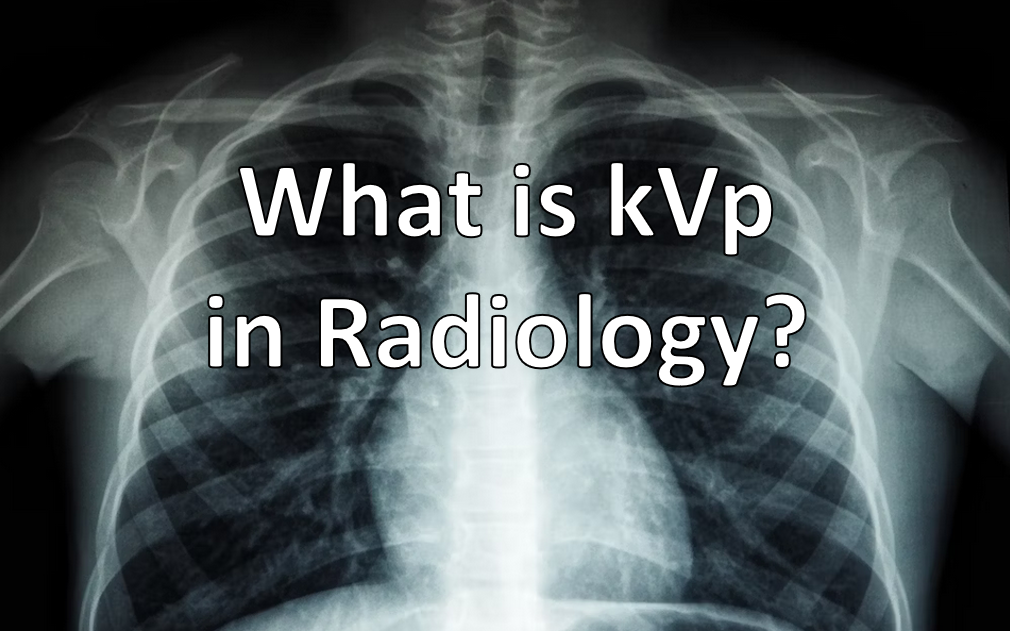
kVp Simply explained
To obtain X-ray or CT images, the X-ray machine or CT-system needs power to generate the X-rays. This power is measured in kilovolts and it determines how strong or “fast” particles (electrons) in the machine are accelerated to generate X-rays. Therefore, the kVp determines how “bright” the images will be.
The kilovolts always come in a “group” from lesser to more powerful ones. The kVp (kilovoltage peak) gives information on “how strong” the strongest parts of this power are.
What Is the Difference Between Lower and Higher kVp?
For X-ray and CT-images kVp changes how the images look:
- More kVp means stronger X-rays, more penetration and brighter images (lower contrast)
- Less kVp means weaker X-rays images, less penetration and higher contrast
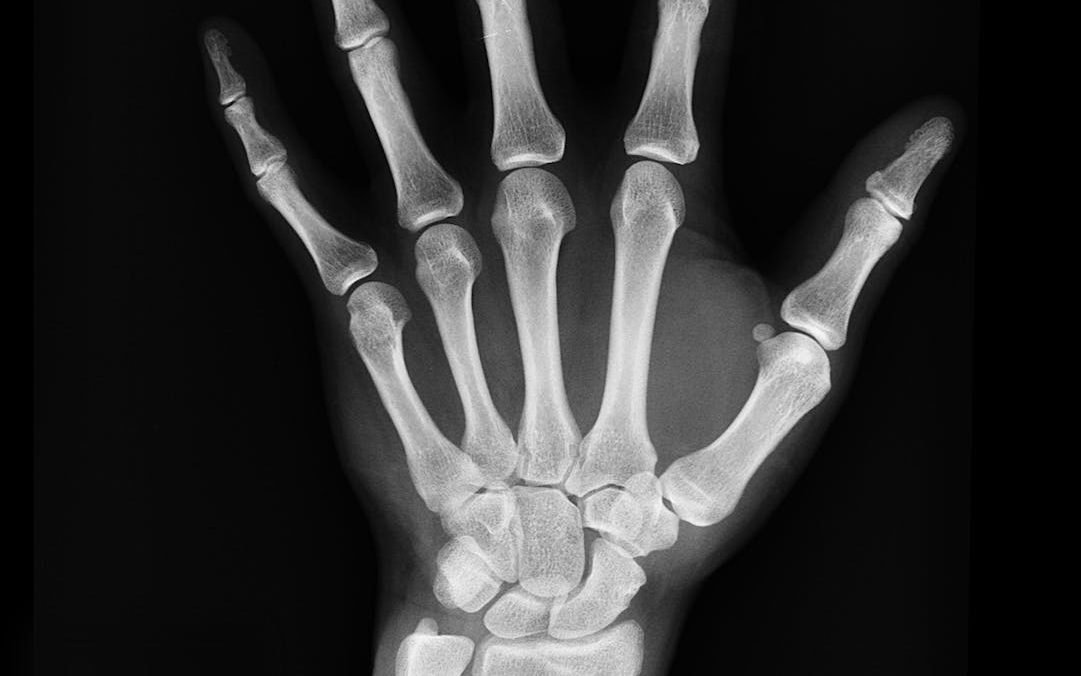
This is important for the radiologist as it determines what can be looked at in your body. For example, soft tissue (such as chest X-rays) need higher kVp (120-130 kVp). But to differentiate bones, less power is needed (70-80 kVp).
Does Higher kVp Mean More Radiation?
In brief (Answer! STAT!): If no other parameters are changed, than yes. Higher kVp means more radiation dose.
For example, in CT, the dose is almost doubled when increasing the kVp by 20% from 100 to 120 kV (if anything else is not changed).
However, there are other variables required to obtain X-ray or CT images. Therefore, the kVp cannot simply be used as a surrogate parameter for the applied radiation dose.
However, if there is higher kVp used in the room, it is even more important to have your lead glasses ready.
What Is kVp in Radiology – The More Complex Explanation
As you may know, the X-ray tube requires both a tube potential (in kilovolts, kV) and a tube current (in Milliampere-seconds, mAs). The peak potential that is applied to the X-ray tube is the kVp. This determines how fast the electrons are accelerated from the cathode to the anode. In addition, the tube voltage is responible for the amount (and quality) of the photons generated in the anode.
If the kVp is changed, the X-ray spectrum is also changed. Changing the tube voltage and kVp can significantly influence the image quality. This is especially important for anyone handeling the parameters of the X-ray or CT-machine and an important information for radiology residents. Higher kV means more penetration and therefore higher exposure (brighter image). Lower kV leads to more contrast due to lower penetration.
Further reading:
- What does STAT mean in radiology?
- What does attenuation mean in radiology?
- What does mAs mean in radiology?
