
Updated October 16th, 2023
Many people wonder what a radiologist does. How is the life of a radiologist? Do radiologists sit in dark rooms in front of their monitors all the time?
In this article I want to give you an overview of a typical day in my life as a radiologist in a university hospital.
Please note, that these are my personal experiences and that they will differ significantly to radiologists working in smaller hospitals, in private practice or in sole interventional radiology. Additionally, that is just the typical weekday workday. Weekends, evenings, nights, and on-call hours are a different story…
A Typical Workday of a Radiologist – In a Nutshell
In brief, this is how my typical radiology workday looks like:
- 7:30 – 8:30 AM – The Beginning: Interdisciplinary discussions. Reviewing cases from the night. Planning the workday.
- 8:30 – 10:00 AM – The First Studies: Second looks. First acquisitions (e.g. cardiac CT).
- 10:00 AM – 2:00 PM – Interventions: Mostly CT- and US-guided interventional procedures.
- 2:00 PM – 4:00 PM – Reading, Discussing, Reviewing: Reading images. Writing reports. Discussing and reviewing cases.
- 4:00 PM – 5:00 PM – Concluding and Finalizing: Clearing lists. Concluding the last routine cases. Tranistion to emergency care.
A Typical Radiology Workday – A Detailed Report
7:30 – 8:30 AM – The Beginning
After arriving at the hospital to start my typical workday in my life as a radiologist, I change into my scrubs. Afterwards I walk to the radiology department to get my phone and boot up my workstation.
In the morning, there are discussions with other physicians to present the cases from the last day and the night. Most of the time, I already prepared the cases to be discussed the day before. Before I walk to the meeting room, I have a last look, if there are any additions from the night, I need to prepare.
In the demonstration room, I present one case after another. The physicians of the other specialties, e.g. cardiology then ask specific questions to the cases. Additionally, they discuss the next steps of the patient. There can be anything between 5 and 50 cases per meeting in the demo room.
8:30 – 10:00 AM – The First Studies
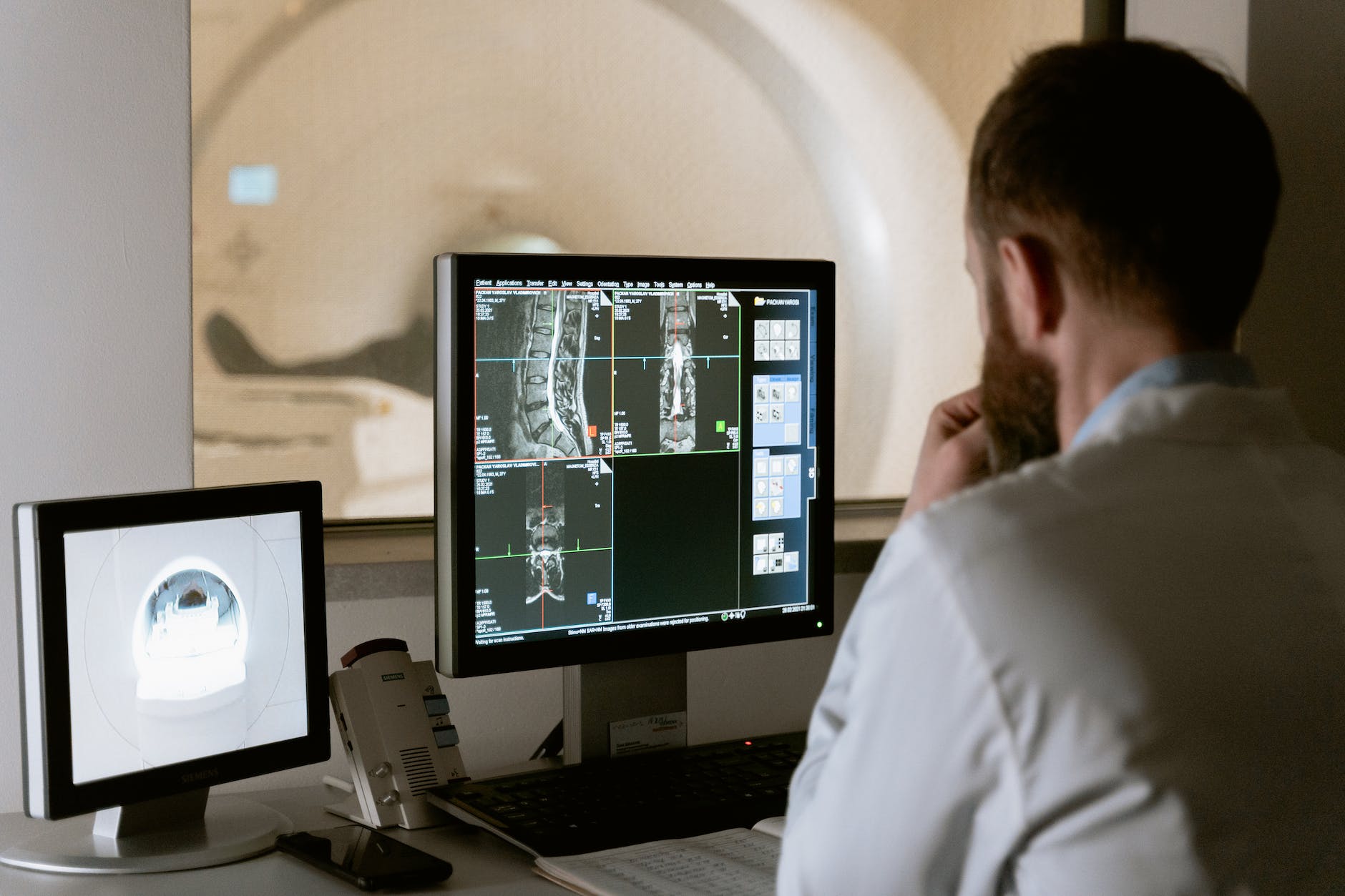
After coming out of the demo room, I typically check my “signing list“. This is a list, in which other radiologists (mostly radiology residents) send their studies to me for a second look. In the morning, this list mostly contains exams of the previous night. Therefore, I start looking at some polytrauma CT scans and many abdominal and pelvic scans (maybe an x-ray or two).
In the mean time, the radiologic technologist are starting to acquire the first scans. For us radiologists, this means talking to the patients before e.g. the CT-scan. We explain what we plan to scan, what the indications and the risks are. If contrast is required, we check the kidney and thyroid function.
If a patient requires a cardiac CT, I additionally check if additional medication is needed (betablockers, nitroglycerin spray). These coronary CTA scans require more attention as we need to apply meds, monitor the patient and set the scan settings for a good cardiac CT study.
10:00 AM – 2:00 PM – Interventions
Disclaimer: Radiology interventions are not only performed between 10:00 AM and 2:00 PM. In fact, they are performed at any time. However, these are the slots that are filled first, and therefore there are procedures during this time, every day. Additionally, I am mostly performing CT (and ultrasound) guided interventional procedures. There are radiologists specifically in the angio suite performing angiographies around the clock.
The typical CT-guided (or ultrasound guided) procedures, I perform on a daily basis (starting with the most common) are:
- Percutaneous biopsies (lung, liver, lymph nodes…)
- Percutaneous drainage (abscess, empyema…)
- Gastrostomies
- Sympathectomies
- Nephrostomies
- Ablation procedures (Microwave, Cryo…)
There are simpler procedures and there are more complicated ones. That is why they can take anywhere from 30 minutes to 3 hours. These procedures are also the reason, why even a radiologist should know how to suture, tie a knot or hold a scalpel.

What is the Process of a CT-guided (or US-guided) Procedure?
The procedure for an interventional procedure is basically something like this:
- Looking at prior scans, talking to the clinicians, planning the procedure
- Talking to the patient. Explain in detail what is planned. Why this procedure was selected and what the alternatives are. Explaining in detail the risks (what can go wrong) and what that would mean for the patient. Once again check indications and contraindications (blood values, medication).
- Imaging of the target (tumor, infection…) with CT or ultrasound.
- Planning how to safely access the target.
- Perform the procedure (this is the longest part – see above: 30 min to hours).
- Final examination, check if everything went right and if any further workup is required.
- Talk to the patient on how the procedure went and what the next steps are.
- Inform the attending physicians and write the report.
Note: This is a very basic summary that will significantly differ between the type of intervention and the overall clinical setting.
2:00 PM – 4:00 PM – Reading, Discussing, Reviewing
In these hours, I mostly dictate or write the reports of the exams I personally performed and anything in the big list (interventional procedures, cardiac CT, staging CT of cancer patients…).
In addition, I am discussing cases with colleagues and especially with radiology residents. Each case is read independently by at least two people, and sometimes a third or even more opinions are needed to resolve a difficult case.
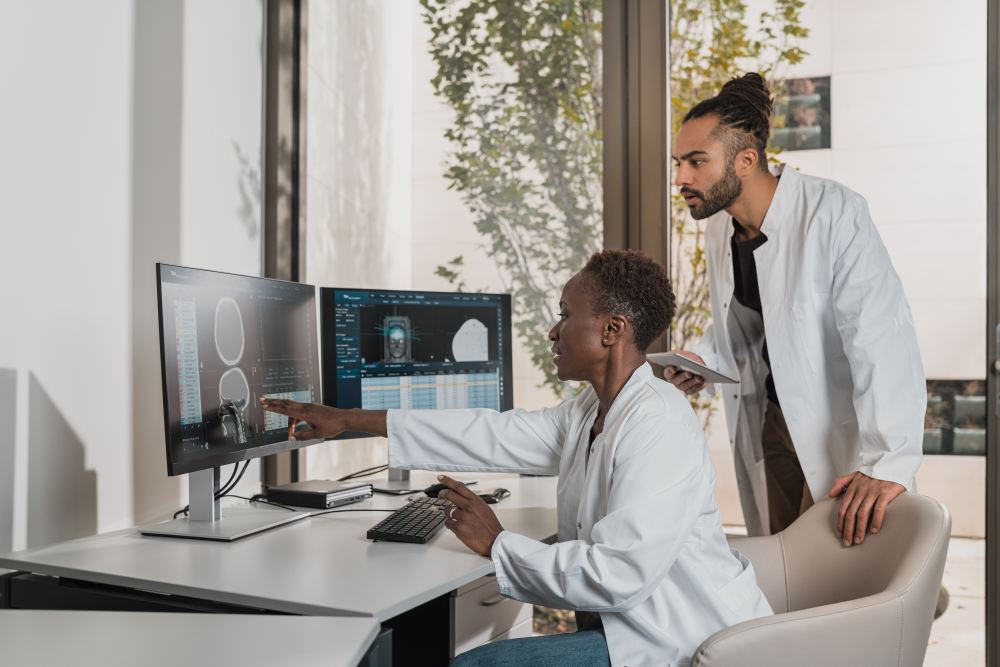
In addition, there are colleagues from the emergency radiology department who stop by to discuss severe trauma cases or complex abdominal scans.
At the end of the day, the goal of our team is, to write reports to all studies and procedures performed this day. However, depending on the workload this is not always possible.
Finally, there are several presentation sessions with different clinical specialties (vascular surgery, visceral surgery, oncology, orthopedics…). I usually present cases (mostly abdominal CT scans) to my visceral surgery colleagues. Other radiologists go to the other demo rooms. However, this can vary depending on the number of exams, length of procedures…
4:00 PM – 5:00 PM – Concluding and Finalizing
In the last hour (or hours – occasionally, it may take a biiit longer than 5:00 PM…) I am finishing all my reports and case discussions. If there are any open question, I may even be briefly looking something up in a radiology textbook.
In the optimum case, all radiologists (except the ones having longer or delayed shigts) can leave their workplace at 5:00 PM. However, this means that all the lists are empty and all planned (elective) studies have been read and the reports are written.
In this time, there is also some sort of transition from routine service to emergency care (thats when raidology starts to become a bit more stressful). Most patients examined in the after hours are emergency cases either from the hospital units or the emergency room.
The Typical Radiology Workday – The Conclusion
Many of you may know the teasing comic of the radiologist´s day by J. Chang. Naturally, the work as a radiologist requires looking at a screen and reading images. However, there is some dynamic in there:
- Looking at a screen while demonstrating cases to physicians of other specialties
- Looking at a CT or MRI monitor during image acquisition
- Looking at a monitor while performing interventional procedures
- Looking at a screen together while discussing cases
Joking aside. Although screens are an essential part of radiology, there are many different scenarios that come with a lot of variety. These scenarios even include patient interaction and standing up!
This diversity combined with the broad spectrum of this specialty are the main reasons why I personally love being a radiologist.
