
Updated September 27th, 2023
Telemedicine and the specialty of teleradiology are emerging fields in medicine. The volume of the teleradiology market is estimated to reach $25 billion by 2030.
Therefore, it´s important to know if and how radiologists can work from home.
In this article I will cover the basic idea of teleradiology and also explain some factors on when and when not a radiologist can work form the radiology home office.
Can Radiologists Work from Home?
In a nutshell: Yes, they can!
However, as so often this is not the complete answer.
You need to know that radiolology consists of different areas. The two major areas are:
- Diagnostic radiology
- Interventional radiology
The diagnostic radiologist is reading images (X-rays, CT-scans, MRI-scans). This can be done distant to the patient as a teleradiologist. However, an interventional radiologist is performing interventions such as angiographies, biopsies or minimally invasive tumor treatments. These procedures cannot be done remotely.
Therefore, the answer needs to be modified slightly:
Can radiologists work from home? Slightly longer answer:
Yes, a diagnostic radiologist can work from home.

How Can Radiologists Work from Home?
First, they need an agreement and the legal basis for working as a teleradiologist. This differs significantly between different countries.
Then it needs to be defined, how radiology examinations are ordered and acquired out on site (in the hospital or in the radiology practice/office)
Afterwartds, the images need to be send to the teleradiologist and she or he needs to read them on a teleradiology workstation.
Finally, the teleradiologist needs to write the report and send it back to the attending physicians (or the patient).
How Does the Basic Teleradiology Workflow Look Like?
The basic workflow of teleradiology is:
- Attending physician orders exam
- Teleradiologist reviews the request (and approves it)
- Teleradiologist defines the protocol for the exam
- Radiology technicians / radiographers acquire images
- Images are sent to the teleradiologist
- Teleradiologist reads images and writes the report
- Report is sent back to the attending physicians
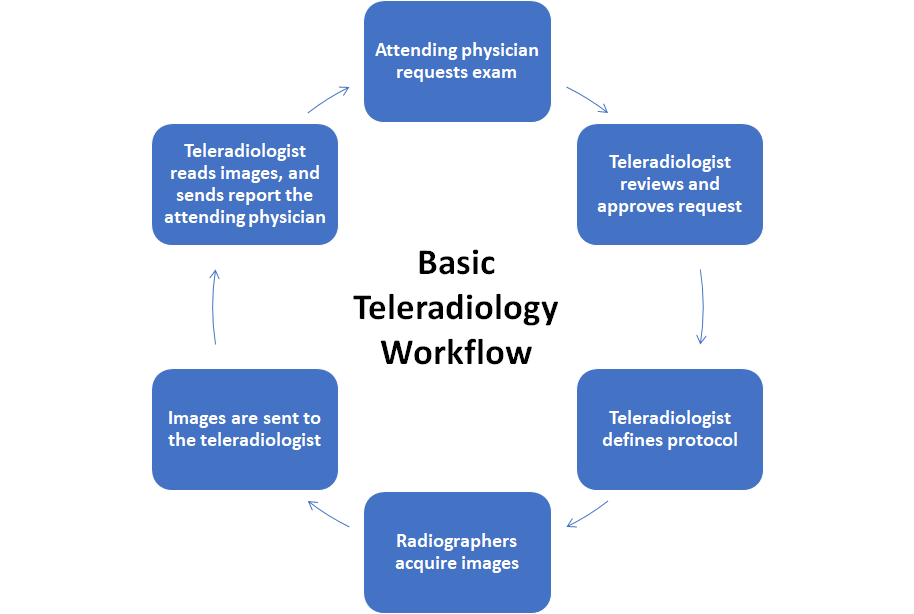
Of course, this workflow will vary depending on various factors such as country regulations, the clinical setting, and the IT integration of the teleradiology system.
How Much Do Teleradiologists Make?
So maybe you´re wondering what is the teleradiology salary? How much do teleradiologists earn?
Many teleradiologists are paid per case. Depending on the contract and the country the radiologist is working in, teleradiologists can earn approximately $20 to $100 per exam (before taxes). Again, there can and will be significant differences for example regarding the type of study (i.e., simple X-ray or complex MRI).
Then there are also teleradiologists that get paid per hour which will also depend on factors such as experience and contract.
Because of these differences, definite numbers per year are difficult to assess. Comparably puts the average annual income of a teleradiologist at around $150,000. This is far below the average annual salary of a radiologist in the US, which is at around $450,000.
Additionally, many teleradiologists work additional jobs such as practice substitutions, expert opinions or they only work as part-time teleradiologists.
How To Become a Teleradiologist?
I´m repeating myself, but again, this will differ significantly depending on the country you´re working in. For example, there are larger teleradiology companies that will hire radiologists. Additionally, there are radiologists working in private practice having arrangements with hospitals to cover nights and weekends as teleradiologists.
If you want to work as a teleradiologist in your home office, I suggest to first research teleradiology companies operating in your country and look at their portfolio. If you think this can be a good fit for you, you can send an application. I think this is the easiest way to go into teleradiology.
The more complex approach is to contact hospitals or practices and offer teleradiology services yourself. However, this also requires you to know the legal basis and to develop and establish an IT-infrastructure. This will be a significant investment of time and money before you can start working from your teleradiology laptop or teleradiology workstation.
