
Updated August 7th, 2026
Ultrasound gel is an almost magical glibbery substance. It enables non-invasive examination of many anatomical regions. Over the last years, I have performed several thousand ultrasounds, both diagnostic and interventional ones. I have worked with a variety of equipment, probes and ultrasound gels (and alternatives). But which one is the best ultrasound gel? Where can I buy ultrasound gel and what is ultrasound gel used for?

I want to answer these and many more questions in this article. Let me share my personal experiences and knowledge.
What Is the Best Ultrasound Gel?
Disclaimer: I´m not affiliated with any of these brands. These are my personal opinions and experiences. However, some of these links are affiliate links, where I may get a commission if you buy it through them. This will not change the price for you.

Aquasonic ultrasound gel is one of the best known and renowned brands. The Aquasonic CLEAR is colorless and odorless. It comes in handy ultrasound gel bottles but also in small sterile packages and larger packs for easy refilling.
I personally have worked with it the most and I cannot really say too many negative things. Its easy to apply to the ultrasound probe. It does not dry too fast and it is wiped off easily. It will not stain clothing or damage transducers.
The differences to the Aquasonic 100 are: no coloring (it’s “CLEAR”) and no fragrance (completely odorless). Choosing a colored or a colorless gel is a personal choice. If you like a light fragrance and color, look at the Aquasonic 100.
I like this colorless and odorless gel the most. Especially the small sterile sonography gel packages for interventional sonography in my routine radiology practice.

This conductive ultrasound gel can be used for both ultrasound and other application areas such as electrotherapy, EMS or TENS.
It is easy to apply and leaves a smooth non-sticky feeling. Suitable for all skin types it can also be used on mucosa areas. The Medvat gel contains aloe vera and comes in a 5-liter refill format with an 8.5 oz refillable bottle — good value for professional use.

Just like the Aquasonic CLEAR, the Aquasonic 100 comes in handy ultrasound gel bottles, in small sterile packages and in larger packs for refilling.
It has the same bacteriostatic, non-irritating and hypoallergenic formula but with a light blue touch and a light pleasant scent. It will also not damage or irritate the skin or the transducers.
Where To Buy Ultrasound Gel?
In most countries, the sale of ultrasound gel is not limited to specialized stores. Although you can buy it in pharmacies, you may pay slightly higher prices. Nowadays, you can find ultrasound gel in many online stores such as Amazon. If you are asking yourself where can I buy ultrasound gel locally, I suggest checking your local pharmacies.
What Is Ultrasound Gel Used for?
The short answer: Ultrasound gel allows the sound waves of the transducer to penetrate the body.

What Does Ultrasound Gel Do? The Longer Answer:
Ultrasonic waves do not like to come in contact with air. When they travel through air, they get scattered. When they are scattered, none (or fewer) are reflected back to the transducer to produce a signal. Therefore, air needs to be removed (reduced) between the transducer and the skin.
Ultrasound gel removes the air between the transducer and the skin (tissue). This reduces the “acoustic impedance” (very high in air, very low in fluid, fat or muscle) and enables sound waves to travel unimpeded to produce a clear image.
If you seek more information, I can strongly recommend this article on NYSORA.
What Are Ultrasound Gel Alternatives?
From time to time I am asked “what can I use instead of ultrasound gel?”. The simple answer: anything that will remove the air between the transducer and the skin. Requirements of an alternative to ultrasound gel: no damage or irritation to the skin, no damage to the transducer, clean and reliable product, no staining, should not dry too fast, should not flow away.
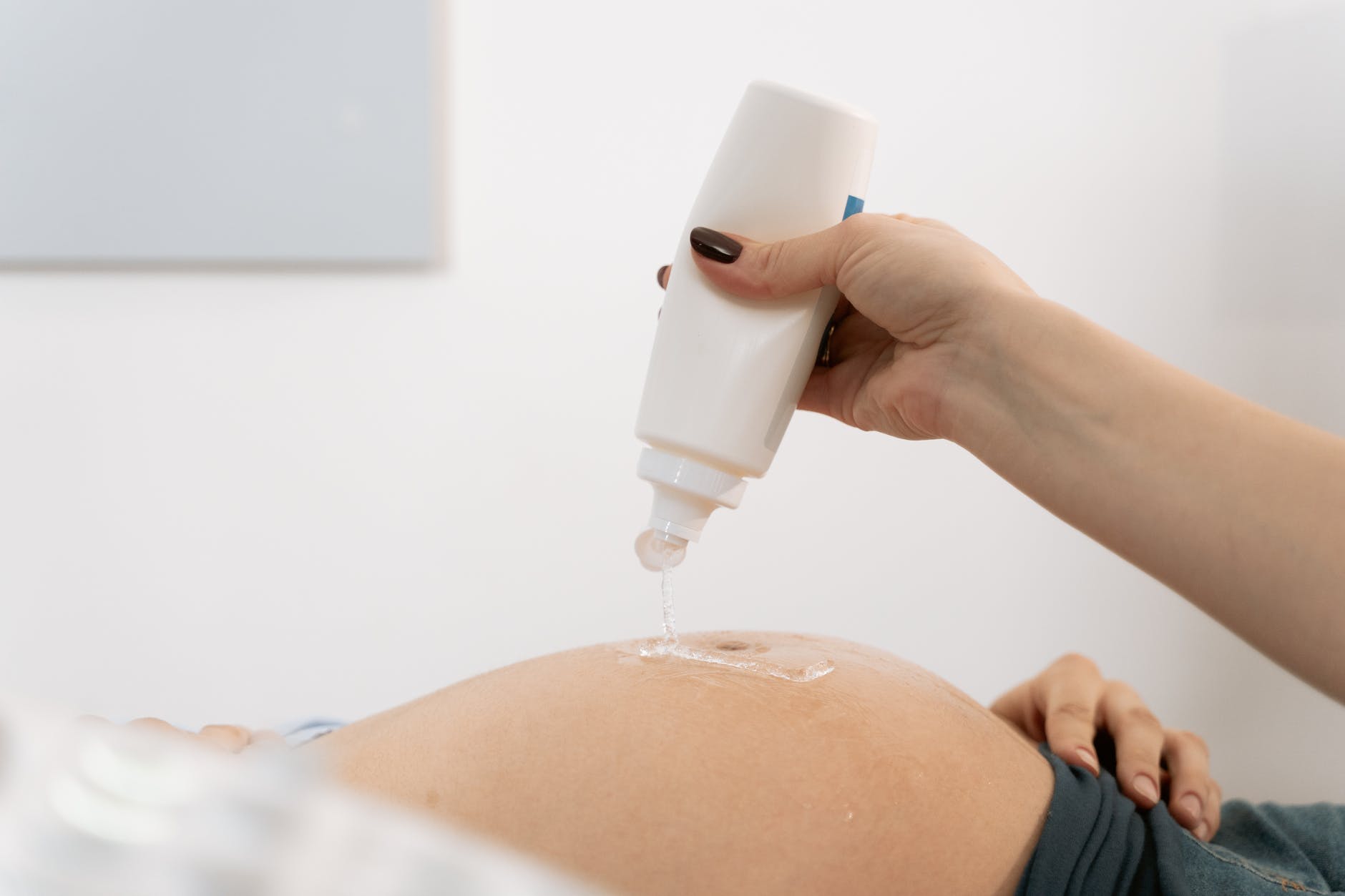
What Can You Use Instead of Ultrasound Gel?
Considering the requirements above, you can use: Water (will flow away and dry fast), disinfectants (check compatibility with your transducer and skin), or lotions (not guaranteed to spare your transducer).
What Is Ultrasound Gel Made of?
The main ingredient of ultrasound gel is as you may have expected: water. However, there are a few other ingredients necessary to give it its unique consistency. Common ultrasound gel ingredients include: water (filler, consistency), propylene glycol (consistency and stickiness), polyacrylic acid / carbomer (thickener), sodium hydroxide (viscosity), and benzyl alcohol (anti-bacterial and anti-fungal).

Although there are a lot of chemical names in there, ultrasound gel is non-toxic. You do not have to worry about it touching your skin or even wounds. By the way, sterile ultrasound gel has exactly the same ingredients as non-sterile versions, it has just been sterilized and is in an airtight container.
What Is an Ultrasound Gel Warmer?
In some situations, it may be a good choice to have ultrasound gel at body temperature. This is especially important if you work in pediatrics or plan to examine sensitive areas. Some ultrasound systems will come with built-in gel warmers. If you plan on buying an ultrasound gel warmer, be aware that it should fit the size and brand of the gel you use. For example, if you use Aquasonic gel, Parker offers a fitting gel warmer:

Be aware that the shelf life will be reduced if you use the gel in a warmer. Depending on the specifications of the manufacturer, warming of ultrasound gel may reduce its shelf life from “no expiration date” to 3 months.
Some links on this site are affiliate links (*). If you choose to buy a product using these links, I might get a commission for this purchase. For you, this does not change the price.
